
Build a design system, not just screens
Tokens, a UI library and dark-mode theming are shared across every module, so one change reaches all of them.
The cost: That work takes time and never shows up as a feature on its own.
Ledgers
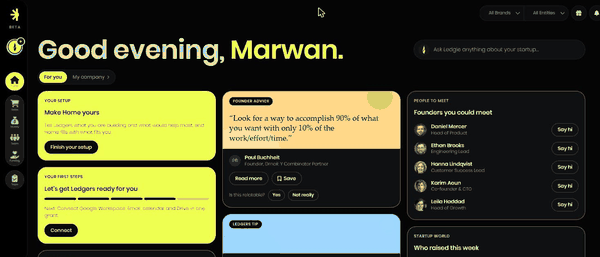
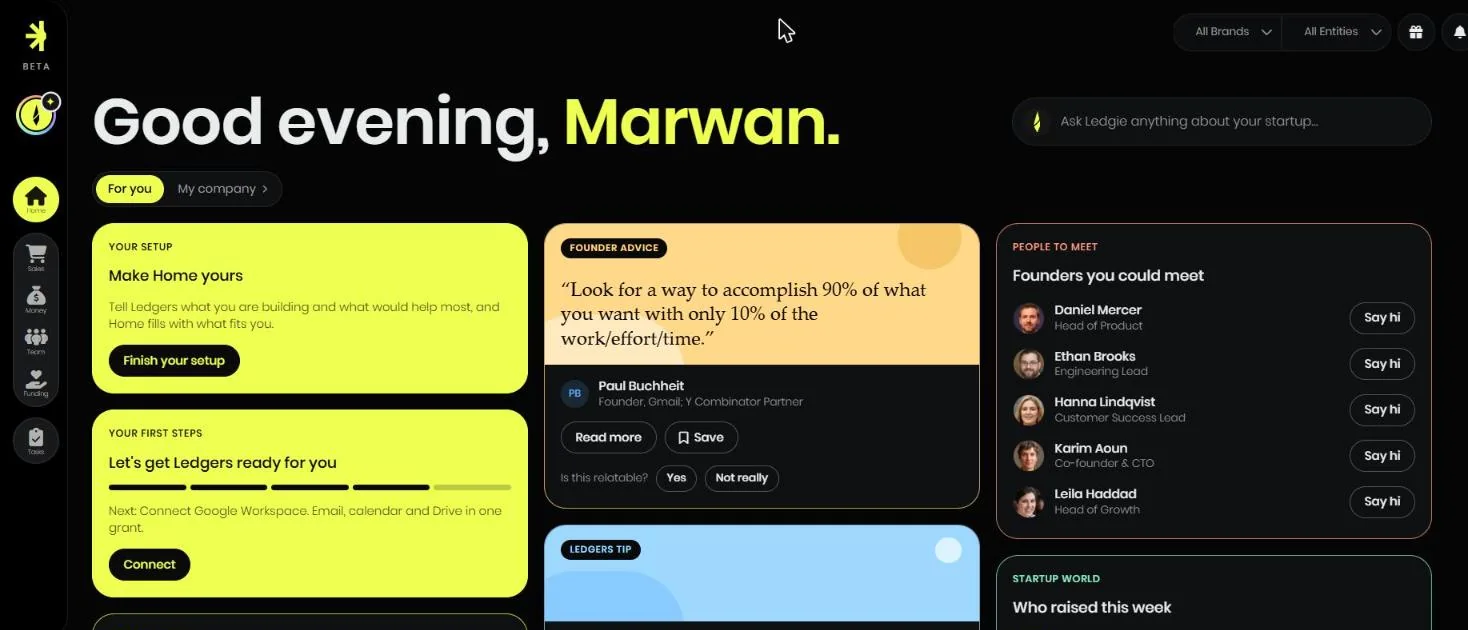
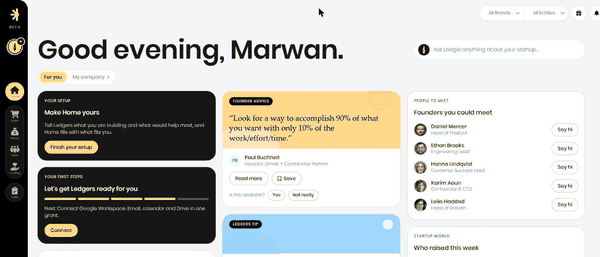
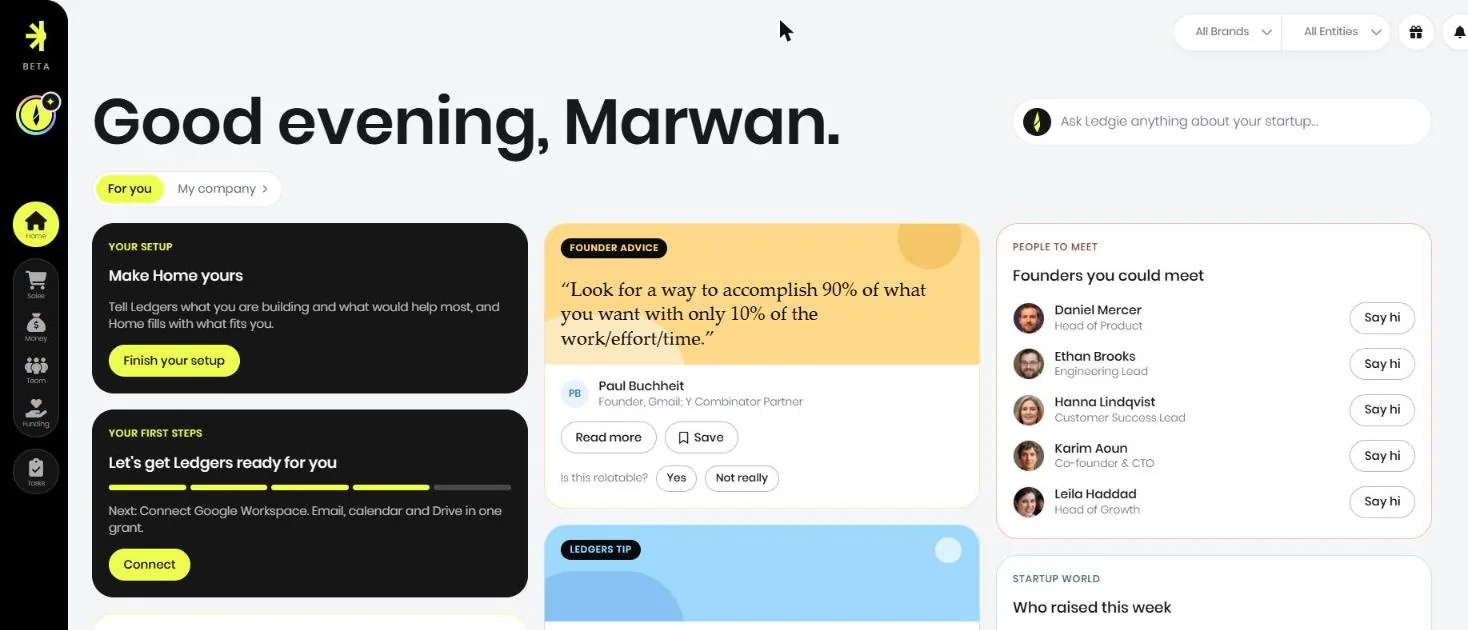
Ledgers is an AI-powered operating system for startup founders, based in New York and Dubai. It brings a CRM, real-time chat, invoicing, planning and dashboards into one product. I'm the only front-end developer on it, so I work with the founder from scoping a feature through to its release.
Ledgers covers a CRM, real-time chat, invoicing, planning and dashboards, and it has to work on the web, on the desktop and on a phone. All of that front end has one developer. If every module and platform needed its own UI work, I would spend my time repeating myself instead of shipping.
Tokens, a UI library and dark-mode theming are shared across every module, so one change reaches all of them.
The cost: That work takes time and never shows up as a feature on its own.
The desktop app and the web platform run the same code, so a feature ships to both.
The cost: An Electron app is heavier than a native one, and things like Google sign-in need their own desktop handling.
The phone app gets real native screens and its own layouts instead of a shrunken web page.
The cost: It is a second codebase to keep in step with the web. It has since moved ahead of the web app on layout.
I built it with SVG filters and a Safari workaround, and I was happy with it. The finished mobile app doesn't use it.
The cost: Good work got thrown away. The product comes first.
Ledgers is in public beta on the web with a Mac desktop download, and the mobile app is in App Store review.